helical piers Vancouver
Helical Pier Installation in Vancouver
Deep support from solid ground
About Helical Pier Installation in Vancouver
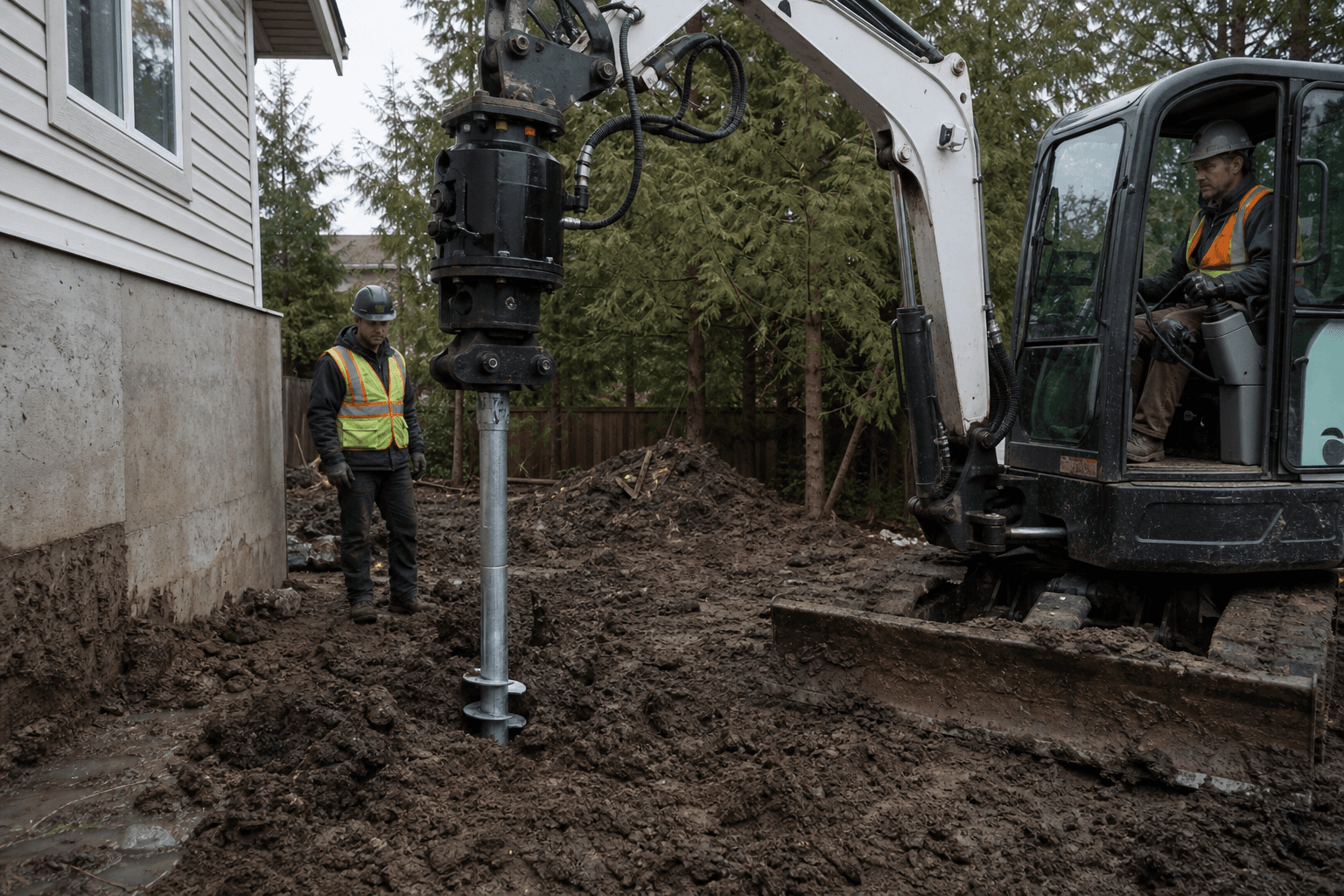
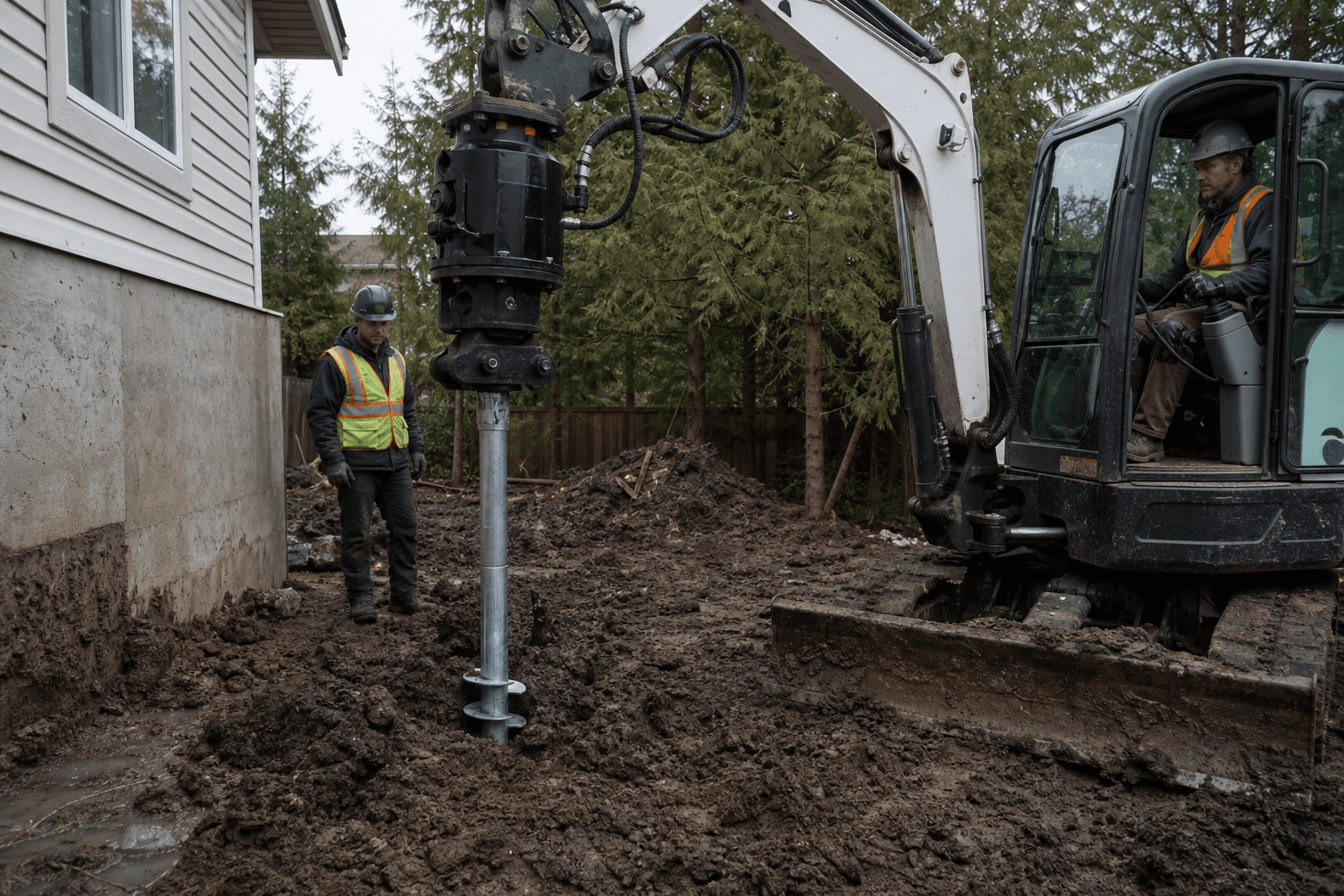
Helical piers are the gold standard for foundation stabilization in areas with poor near-surface soils — which describes most of Metro Vancouver's Lower Mainland communities. A helical pier is a steel shaft with one or more helical bearing plates welded along its length. A hydraulic motor rotates the pier into the ground like a large screw, with the helical plates advancing through soft soils to reach dense sand, gravel, or bedrock. Because the installation is entirely rotational (no vibration, no spoil removal), helical piers can be installed in tight access situations using tracked mini-excavators or even compact hand equipment for interior crawl space and basement applications. Every pier is installed to a torque that empirically verifies its compression and tension capacity. Elite Vancouver Foundation Repair brings the right equipment and the right method to every job.
Signs You Need This Service
- Foundation corner visibly lower than the rest
- Settlement-induced cracking at wall-to-footing joint
- Floor slope greater than 1 inch over 10 feet
- Previous crack repairs opening up again
- Structural engineer recommends deep foundation support
Why Fix It Now
Our Helical Pier Installation Process
Engineering & Layout
A licensed structural engineer specifies the pier schedule: shaft diameter, helix configuration, target torque, and bracket design. Layouts are optimized for load distribution and access.
Installation
Piers are advanced by a hydraulic torque head attached to a mini-excavator or skid steer. Torque is recorded continuously and installation terminates when the required torque is sustained for 3 continuous feet at or beyond minimum depth.
Bracket Installation
Bearing brackets are welded or bolted to the pier shaft and grouted to the existing footing or pile cap, transferring the structural load from the failing shallow foundation to the new deep pier.
Load Test & Documentation
Representative piers are load-tested to 200% of design load. Torque logs, load test data, and as-built drawings are provided as a complete engineered record.
Ready to fix it for good?
Call 604-373-3161Helical Pier Installation FAQ
What makes helical piers better than push piers?
Can helical piers be installed inside a basement?
How many piers does a typical project need?
Get a Free Helical Pier Installation Assessment
No obligation. No sales pitch. A licensed technician visits, assesses, and gives you a plain-English report.