foundation crack repair Vancouver
Foundation Crack Repair in Vancouver
Stop cracks before they spread
About Foundation Crack Repair in Vancouver
Foundation cracks are the most common structural issue in Metro Vancouver homes, and the most misunderstood. Not every crack is an emergency, but every crack is a signal. Hairline cracks in poured concrete walls often result from normal concrete shrinkage and can be sealed with low-pressure epoxy injection. Horizontal cracks indicate lateral soil pressure that must be addressed before the wall rotates inward. Stair-step cracks in block or brick foundations signal differential settlement. We assess each crack individually: its width, depth, orientation, displacement, and moisture activity before recommending the appropriate repair.
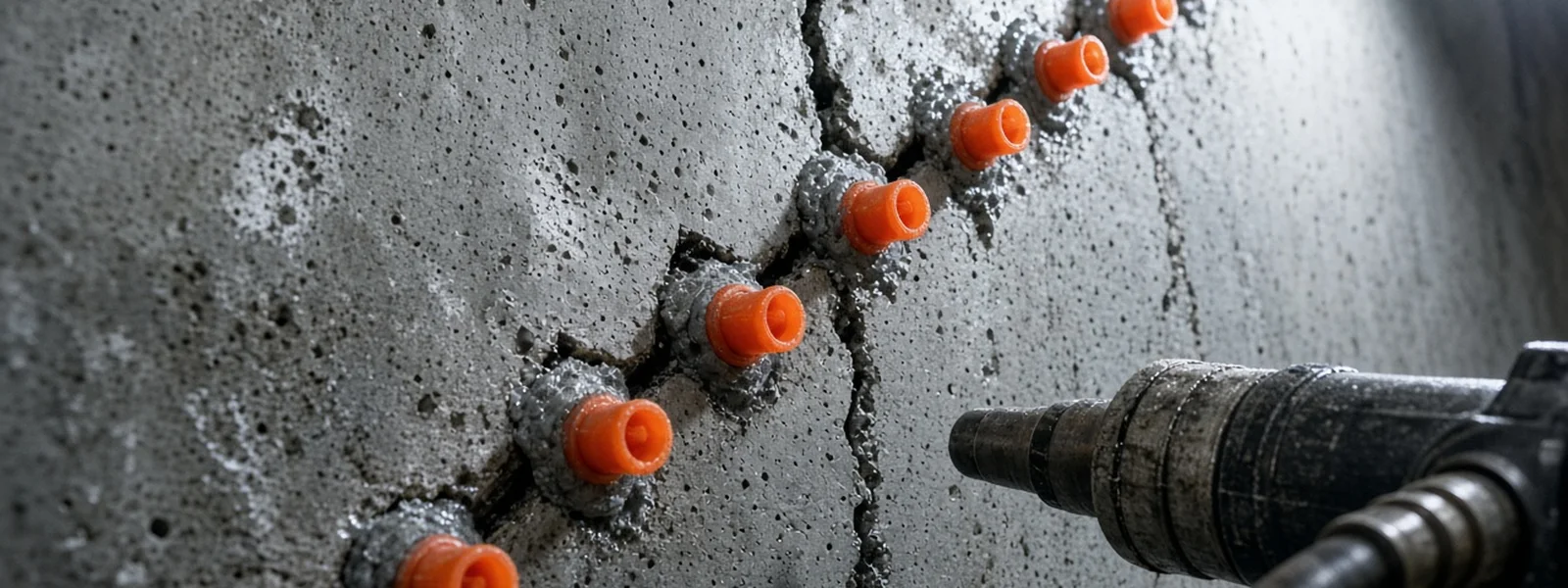
The two materials used for injection serve different purposes and are not interchangeable. Epoxy resin has a compressive strength above 70 MPa once cured, well above standard concrete, and it bonds the crack faces into a monolithic section. It is the right choice for a dry, structurally significant crack that is no longer moving. Polyurethane foam is flexible and hydrophilic: it cures in the presence of water and tolerates minor ongoing movement without debonding. Using the wrong material — epoxy in a wet, moving crack — produces a repair that pops out within a season. We carry both systems on every job and choose in the field based on moisture conditions at each port, not before we arrive. Elite Vancouver Foundation Repair brings the right equipment and the right method to every job.
Signs You Need This Service
- Visible crack wider than a credit card edge
- Crack showing displacement — one side higher than the other
- Water seeping through during heavy rain
- Horizontal crack at mid-wall height
- Crack has grown since you first noticed it
Why Fix It Now
Our Foundation Crack Repair Process
Crack Assessment
We map every crack, measure width and displacement at multiple points, probe for depth, and check for active water. Horizontal and stair-step cracks get differential settlement testing.
Method Selection
Dry structural cracks get rigid epoxy injection. Wet or moving cracks get hydrophilic polyurethane foam, which expands on contact with water to create a watertight seal.
Injection
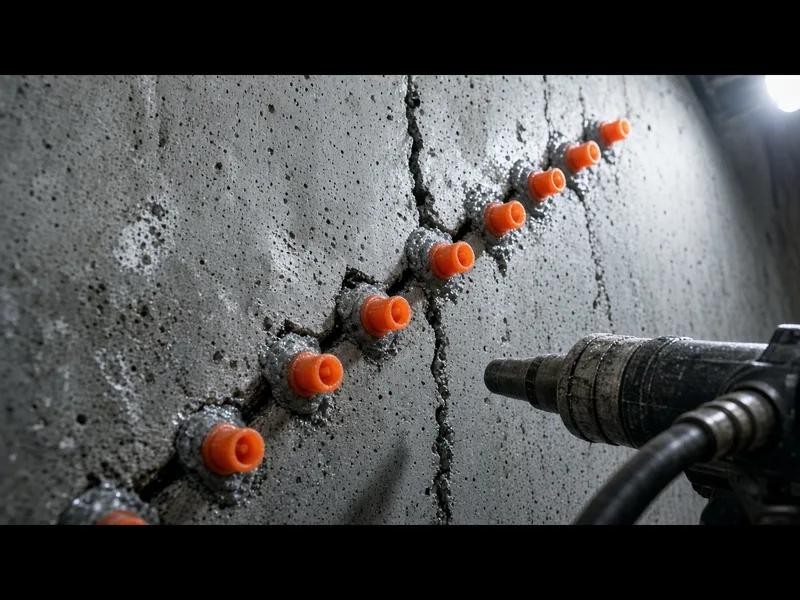
Injection ports are installed at depth-to-width spacing intervals. Low-pressure injection fills the crack from the bottom up. We verify penetration with a tracer before pulling ports.
Surface Patch & Seal
Port holes are patched with hydraulic cement or matching colour mortar. A crystalline surface sealant is applied to the full crack zone to block secondary moisture paths.
Ready to fix it for good?
Call now, free assessment604-373-3161Foundation Crack Repair in Metro Vancouver
Why Vancouver homes crack more than you'd expect
Metro Vancouver's combination of wet winters, expansive clay soils, and housing stock built largely between 1920 and 1980 creates near-ideal conditions for foundation cracking. Pre-1960 concrete contained less entrained air than modern mixes and is more susceptible to freeze-thaw spalling and carbonation-driven rebar corrosion. Clay soils in Burnaby, East Vancouver, and Coquitlam swell with winter moisture and shrink in summer, creating cyclical lateral pressure that slowly opens shrinkage cracks into structural gaps.
The specific challenge of block foundations in older Vancouver neighbourhoods
Many homes in Kitsilano, Mount Pleasant, and Grandview-Woodland were built on concrete block foundations rather than poured concrete. Block foundations are more susceptible to stair-step cracking at the mortar joints when differential settlement occurs, and they cannot be injected the same way poured concrete can. Block wall cracks require mortar repointing, sometimes combined with carbon fibre strapping on the interior face. We assess block walls differently from poured concrete walls and apply the appropriate technique for each.
Crack monitoring before you call anyone
Before calling any contractor, mark your cracks with a pencil line across each end and write the date. Come back in 60 to 90 days. A crack that has not moved during the wet season is likely dormant and can be sealed without further investigation. A crack that has grown is active and needs a cause diagnosis before repair. Sealing an active crack without fixing the cause — ongoing settlement, lateral pressure, or freeze-thaw wedging — produces a repair that reopens, usually at a slightly different line.
What Affects the Cost of Foundation Crack Repair
Every job is different. These are the main variables that move the number up or down — knowing them helps you understand any quote you receive.
Number and length of cracks
Each crack requires individual assessment, port placement, and injection. A single 600 mm crack costs significantly less than a wall with six cracks of varying length.
Crack type and material
Epoxy injection for dry structural cracks is straightforward. Actively leaking cracks requiring polyurethane foam take more time and product. Block wall repointing is more labour-intensive than poured concrete injection.
Crack width and depth
Very narrow cracks (under 0.3 mm) may require a different port spacing and may consume more product to achieve full penetration. Very wide cracks may need hydraulic cement pre-fill before injection.
Wall accessibility
Cracks behind finished drywall or insulation require demolition and re-finishing. Interior access from a cluttered mechanical room adds time. Exterior access from below grade is rare but occasionally needed.
Cause investigation
If the crack orientation or displacement suggests an underlying structural cause, we may recommend a structural engineer's assessment before repair. This adds professional fees but prevents repairing a symptom while the cause continues.
Surface finish required
A patch that must match decorative block, painted concrete, or a heritage masonry profile costs more than a plain hydraulic cement fill. Colour-matched mortar and specialty finishes are charged accordingly.
Foundation Crack Repair FAQ
Can you repair cracks from the inside?
Will the crack come back?
How long does crack repair take?
My crack is leaking right now. Can you fix it in wet conditions?
Is a horizontal crack more serious than a vertical one?
My house is for sale. Do I need to disclose foundation cracks?
Can I paint over the crack repair?
Free on-site assessment
Get a Free Foundation Crack Repair Assessment
Elite Vancouver Foundation Repair sends a licensed technician to take a look. No obligation, no sales pitch, and you get a plain-English report.