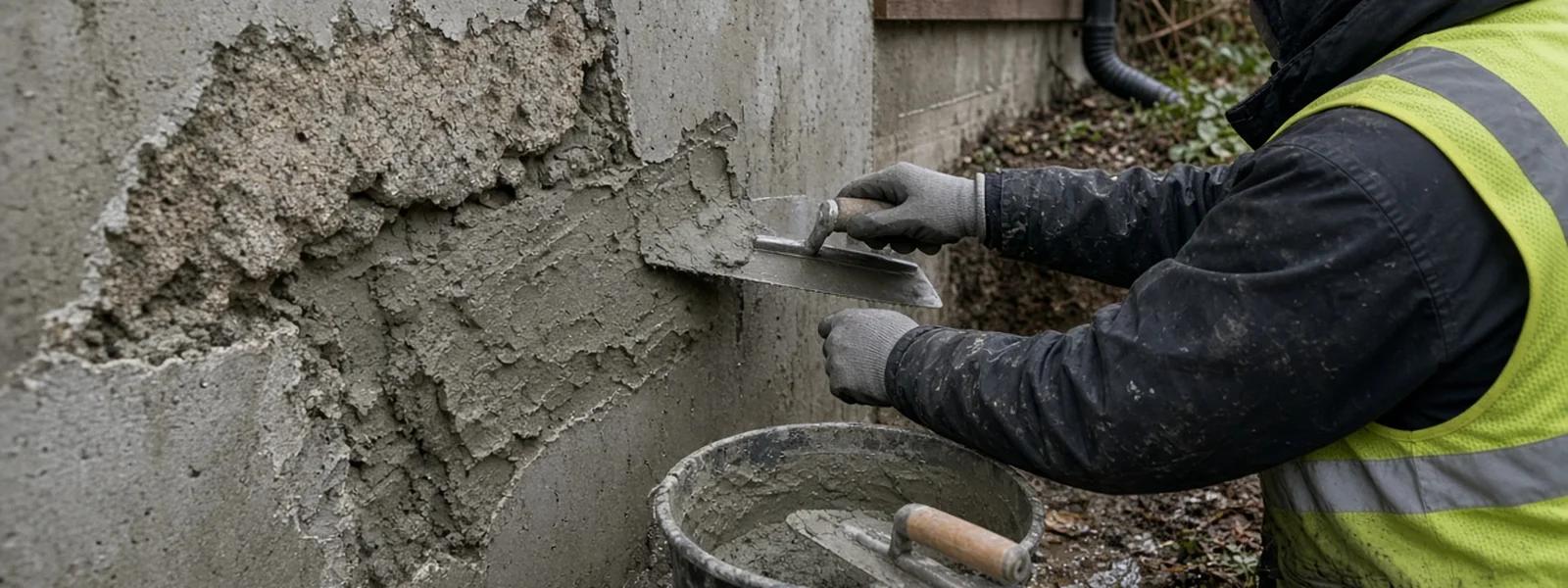
concrete foundation repair Vancouver
Concrete Foundation Repair in Vancouver
Restore concrete to full strength
About Concrete Foundation Repair in Vancouver
Concrete foundations in Metro Vancouver face a specific set of deterioration mechanisms. Freeze-thaw cycling spalls and scales exposed surfaces. Carbonation drives the pH down and allows rebar to rust, which expands and splits the cover. Alkali-silica reaction causes map cracking in aggregates that reacted with cement alkalinity. Sulphate attack from Vancouver's glacial till softens and disintegrates concrete over decades. We start by identifying the mechanism, not just the symptom. The repair system is chosen based on the cause: structural patching with high-bond cementitious mortar, epoxy injection for deep cracks, surface coatings to stop further deterioration, and rebar treatment to prevent future corrosion.
BC's concrete foundations face a deterioration pathway that is worth understanding because it drives the repair specification. Carbonation advances inward from the surface at roughly 1 mm per year in an exposed wall. When the carbonation front reaches the rebar depth — typically 25 to 40 mm in pre-1980 construction — the passive oxide layer protecting the steel breaks down and corrosion starts. Each rust molecule occupies about three times the volume of the original iron, so the expanding rebar splits the cover in a process called rebar-induced spalling. The fix is not just patching: the rebar must be exposed, cleaned to bare metal (SSPC SP-6 commercial blast or equivalent hand preparation), coated with a zinc-rich or epoxy corrosion inhibitor, and then encapsulated with a repair mortar that has a chloride permeability and pH compatible with the existing concrete. Skipping the rebar treatment produces a patch that fails at the same location within five years. Elite Vancouver Foundation Repair brings the right equipment and the right method to every job.
Signs You Need This Service
- Flaking or scaling concrete on the wall surface
- Orange staining from corroding rebar beneath the surface
- Chunks of concrete loose or missing from the wall face
- Fine map cracking across a large area of the wall
- Soft or hollow-sounding areas when the wall is tapped
Why Fix It Now
Our Concrete Foundation Repair Process
Deterioration Mapping
We sound the concrete surface to locate delaminated areas, probe cracks for depth and moisture, and assess the extent of rebar corrosion. Spalled zones are marked and photographed.
Surface Preparation
Loose material is removed to sound concrete. Rebar is exposed where corroded, cleaned to bare metal, and coated with an epoxy-based corrosion inhibitor. Edges are saw-cut to prevent feathering.
Repair Application
Deep structural areas are filled with a high-bond repair mortar matching the existing concrete in strength and thermal expansion. Surface patches are textured to match surrounding concrete.
Protective Coating
A penetrating crystalline or silane-siloxane sealer is applied to the repaired zone and surrounding area to block future water and chloride ingress. Crack zones receive an elastomeric coating to bridge future micro-movement.
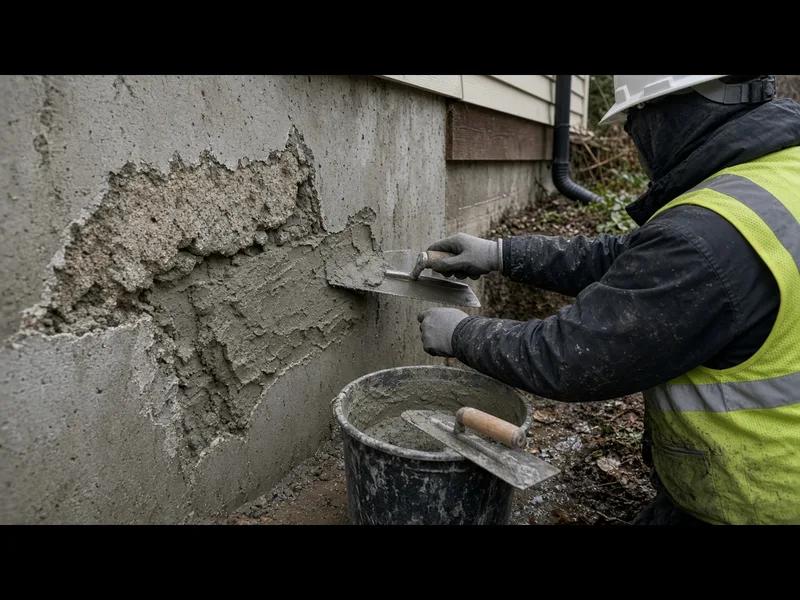
Ready to fix it for good?
Call now, free assessment604-373-3161Concrete Foundation Repair in Metro Vancouver
Pre-1960 concrete and the carbonation problem
Metro Vancouver's pre-1960 concrete was mixed with less cement content and less cover over the rebar than modern standards require. The carbonation front in a 1940s foundation has had 80 years to advance inward, and in many cases it has reached or passed the rebar depth. If your home was built before 1960 and you have never had the foundation assessed, an inspection that includes a phenolphthalein carbonation test on a small sample can tell you exactly how far the carbonation front has progressed and whether the rebar is at risk.
Sulphate soils in certain Lower Mainland areas
Parts of the Lower Mainland — particularly some areas in Surrey and Langley — have soils with elevated sulphate content from glacial deposits. Sulphate ions react with cement hydration products over decades to produce expansive gypsum, which softens and disintegrates the concrete from the outside in. If your foundation concrete feels soft or crumbles when probed, or if the wall face has a powdery, chalky surface texture, sulphate attack is a possible cause. The repair approach differs from carbonation: sulphate-damaged sections must be removed and replaced with sulphate-resistant concrete, not just patched.
What Affects the Cost of Concrete Foundation Repair
Every job is different. These are the main variables that move the number up or down — knowing them helps you understand any quote you receive.
Area of deteriorated concrete
Repair cost scales closely with the area of concrete that must be removed and replaced. Small isolated patches cost less than widespread spalling across a full wall face.
Rebar corrosion extent
If the rebar is corroded over a long run, it must be fully exposed, treated, and re-embedded — a labour-intensive step. Localized rebar corrosion at a single spall spot costs far less.
Required depth of patch
A 20 mm surface patch is much less work than a 100 mm through-section repair. Deep honeycombing or large voids may require formwork.
Surface finish match
A structural patch left as-is costs less than a finish-matched patch where texture, aggregate exposure, or colour must match heritage or decorative concrete.
Access and working height
Repairs on a foundation wall that requires scaffolding or is below grade with limited access take longer. Confined-space entry for interior wall repairs in a low-clearance basement also adds time.
Concrete Foundation Repair FAQ
Can a heavily spalled foundation be repaired, or does it need replacing?
How long does concrete repair last?
My foundation has a lot of small map cracks. Is that serious?
What is the difference between a patch repair and an injection repair?
Orange staining is appearing on my foundation. What causes it?
Do I need a permit for concrete foundation repair?
Free on-site assessment
Get a Free Concrete Foundation Repair Assessment
Elite Vancouver Foundation Repair sends a licensed technician to take a look. No obligation, no sales pitch, and you get a plain-English report.