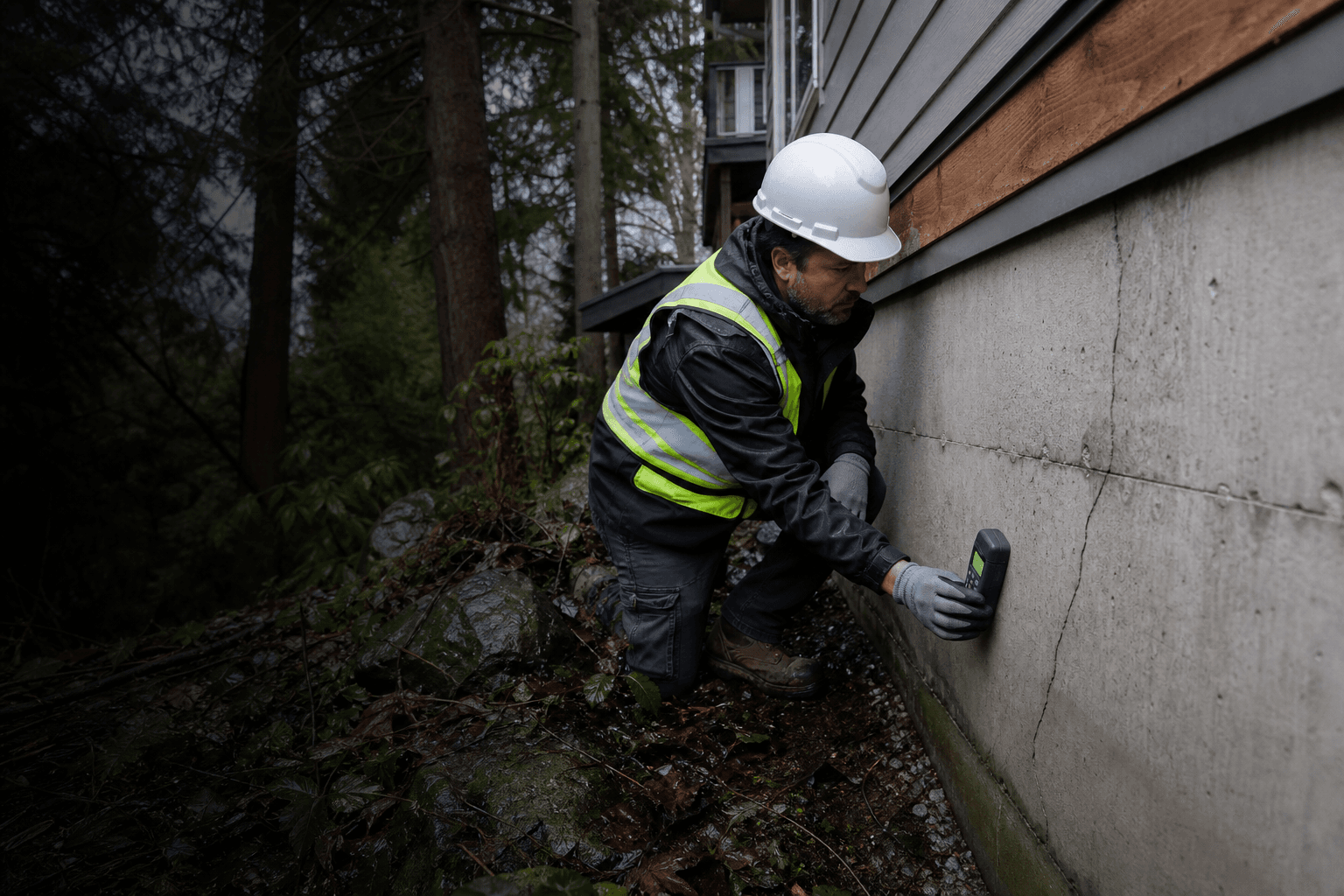
Metro Vancouver gets an average of 1,153 mm of rainfall per year — and most of that falls between October and April, when the ground is already saturated and can't absorb any more. If your basement is damp, dripping, or outright wet during those months, you're not alone. You're also not out of options.
The first step is understanding why water is getting in, because the fix depends entirely on the cause. Throwing a coat of waterproofing paint on a wall that's experiencing hydrostatic pressure is like putting a bandage on a broken pipe — it looks like progress and does nothing.
Failed or Collapsed Weeping Tile
Homes built before the mid-1990s typically have one of two types of perimeter drainage: clay tile (the original system, which sections apart over time) or early perforated plastic pipe that has silted in. Both fail in the same way — water can no longer flow to daylight or a sump, so it builds up at the footing and finds the path of least resistance into the basement.
A camera inspection of your weeping tile will confirm its condition in less than an hour. Replacement is disruptive — it requires excavation around the perimeter — but it addresses the root cause. Interior drainage systems are a valid alternative when excavation isn't practical.
Hydrostatic Pressure Through Cracks and Cold Joints
Water under pressure will find every crack, cold joint (the horizontal seam between the footing and the wall), and unsealed pipe penetration in your foundation. During heavy rain events, the water table around a foundation can rise by several feet in a few hours, dramatically increasing hydrostatic pressure.
Crack injection with polyurethane or epoxy seals the entry points. But if the weeping tile is failed, sealed cracks will be followed by new ones elsewhere — you've just forced the water to find a new path.
Condensation
Not all basement moisture is water coming in from outside. In summer, warm humid air enters the basement and condenses on the cold concrete walls and floor. The result looks like seepage but has nothing to do with your waterproofing system. A dehumidifier in the basement and improving air circulation solves condensation without any structural work.
Test for condensation by taping a piece of plastic sheeting over a damp spot on the wall for 24 hours. If moisture collects on the inside (between plastic and wall), it's coming through the wall. If it collects on the outside of the plastic, it's condensation.
Grading and Downspout Issues
Before spending anything on waterproofing, check two things: does the ground slope away from your foundation at 6 inches over 10 feet? And do your downspouts discharge at least 6 feet from the foundation? These two items alone are responsible for a significant portion of Metro Vancouver basement moisture problems — and fixing them costs almost nothing.
What to Do Next
Call for an assessment. A good foundation contractor will diagnose the actual source of your moisture before recommending a solution. The assessment is free, takes about an hour, and gives you a clear picture of what's happening and what the options are. You decide what to do next — no pressure.
Elite Vancouver Foundation Repair Team
Foundation repair specialists serving Greater Vancouver since 2012