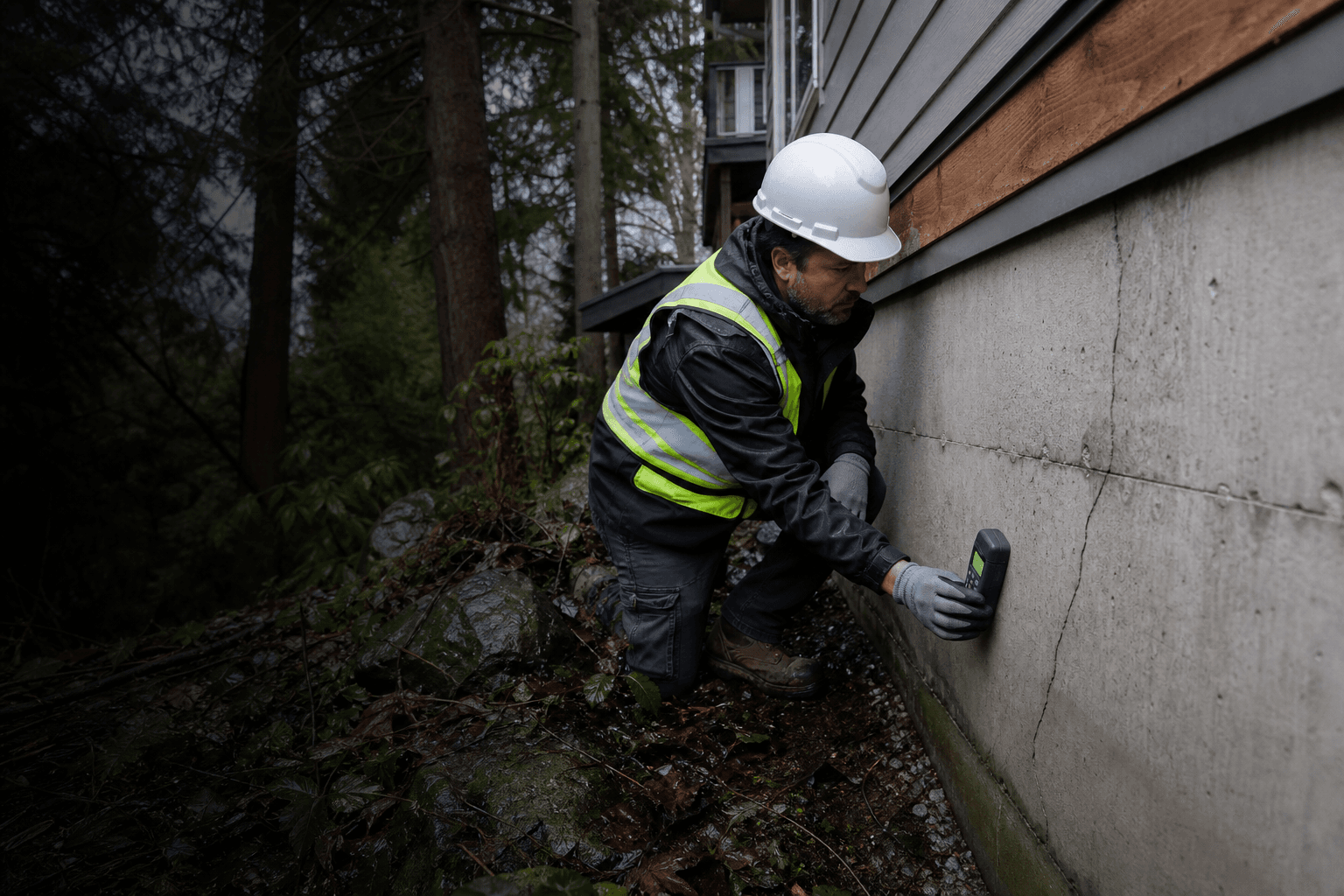
A foundation crack showed up. Before you call anyone, it helps to understand what you're looking at — because the shape, orientation, and width of a crack each tell you something specific about what caused it and how serious it is.
Orientation: The Most Important Factor
Horizontal cracks are the most serious type. They appear when lateral soil pressure — from saturated clay, frost heave, or hydrostatic groundwater — exceeds the wall's resistance. If you see a horizontal crack in a concrete block or poured concrete wall, especially at mid-wall height, call a foundation professional. Left untreated, the wall will continue to rotate inward.
Stair-step cracks in concrete block or brick walls follow the mortar joints in a stair-step diagonal pattern. They typically indicate differential settlement — one part of the foundation is sinking faster than another. The underlying cause could be erosion, organics decomposing in the soil, or poor bearing material under the footing.
Vertical cracks in poured concrete are usually shrinkage cracks — they form as the concrete cures and loses moisture. Most are cosmetic. The concern is whether they're wide enough to allow water infiltration (more than a credit card edge, roughly 1/16") or whether they show displacement — one side higher or lower than the other, which indicates structural movement.
Diagonal cracks running from the corners of window or door openings signal differential settlement and frame racking. The crack points toward the high side of the settlement.
Width and Displacement
A simple reference: a credit card is about 1/16" thick. A pencil is about 1/4". Any crack thicker than a pencil at any point deserves professional assessment. Any crack showing displacement — where one side of the crack is at a different elevation than the other — is a structural movement indicator regardless of width.
Active vs. Dormant
Scratch a pencil mark across the crack at each end. Come back in three to six months. If the marks have shifted, the crack is active — still growing. An active crack needs investigation before it's repaired; sealing an active crack without addressing the cause is temporary at best.
You can also stuff a small piece of paper into the crack and check for moisture. Water infiltrating an unsealed crack will accelerate deterioration and, in Metro Vancouver's freeze-thaw climate, mechanically widen the crack each winter.
The One Rule That Always Applies
If you're unsure, get a professional assessment. A good foundation contractor will tell you honestly whether a crack needs immediate repair, can wait, or is simply cosmetic. There's no cost to finding out — a free on-site assessment takes less than an hour and gives you certainty either way.
Elite Vancouver Foundation Repair Team
Foundation repair specialists serving Greater Vancouver since 2012